The First Chapter of my DEBUT ADULT FANTASY NOVEL?!
I’m delighted the share the first chapter of my Debut Fantasy Novel, ‘NOT THE HERO.’ It sits at around 100,000 words, having been edited four times, and I am hoping to have it published by this time next year!!
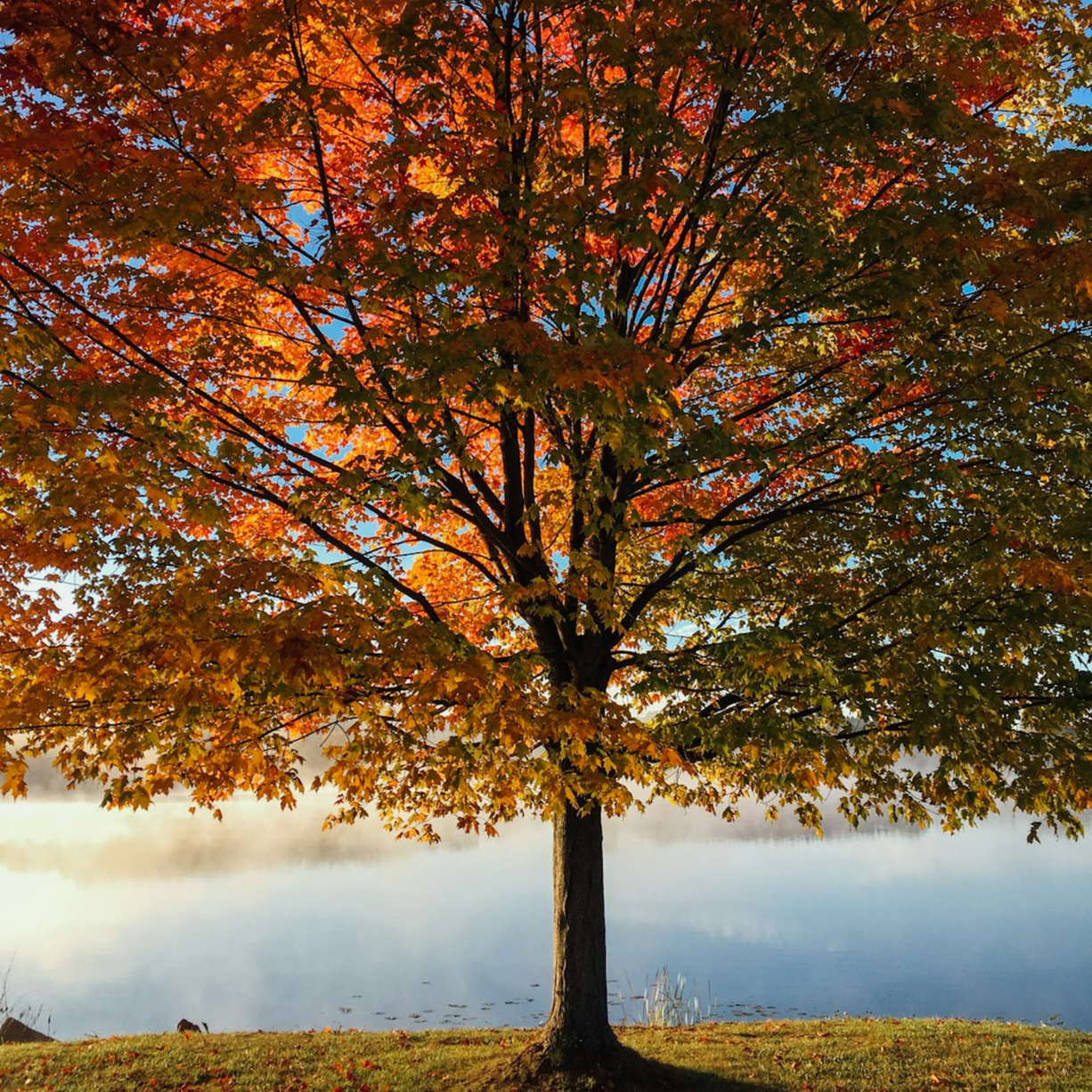
The great tree leered from above, its fingertip branches shaking in the wind as if to scold me. I was late, and it knew it. With a ghostly trunk that outgrew the castle around it, and thick maple leaves that left the courtyard in shadows, it was no wonder we revered this freakish behemoth of nature.
I entered through the portcullis, an open arch bordered by thick walls of stone, its metallic teeth shining from above. The palace grounds were ahead, a garden full of jasmine-climbing arches; hibiscus in orderly rows; and durantas lining the path paved towards the courtyard.
I ran along it, not stopping to appreciate the floral scent. Not stopping to admire the great fountains on either side of me. Not stopping to catch my breath. Because if I couldn’t see my fellow acolytes, the ceremony must have started already. They were going to beat me for this.
I found the courtyard, a large, beige square surrounded by the three rectangular buildings that made up the palace: the ones on the left and right belonged to Lady Kerriwen and Lord Ignatius respectively, and the one in the centre belonged to the Queen.
My heart grew unsteady, shaken by the nerves that came with knowing this might be my home for the next five years. That I might be lucky enough to cater to the Queen’s every word and whim. That I would start— once again— anew, as I transitioned into adulthood.
I couldn’t dwell on it. I focused on my surroundings. Valla’s Tree stood at the centre of the clearing, proud and with such reach it loomed above me like a giant; guards and lords waited beside it, watching the rows of acolytes, dressed in tunics marked by their house crest, who stood silent and forward facing with blank expressions. The Queen was absent, as was the Ranger General, but they were preoccupied with more important tasks: they had a war to win.
The acolytes ignored me as I entered; their eyes were fixed on the headmaster of the Ranger Academy, Rajat Atarkin, as he spoke of the events to come. But my lord still registered my absence. His glower was sufficient to startle the pit of snakes writhing inside my stomach. I would be representing him today.
It was amusing how similar we looked. In another world, he could have been my father. The almond shade of our skin was a touch darker than that of our colleagues; our jet-black hair moved in waves across our heads; even our gangly limbs were akin. My features were more angular, and my body less muscular, but that was more in part due to the difference in our circumstances. How was a labouring girl with little sustenance to carry a great frame?
Lord Belheim had been my patron since I was taken from my home fourteen years ago; and at his hand, I had been taught, clothed, and fed; beaten, trained and punished. Every move in my life had been controlled so that I would make the perfect soldier. So that I would do him proud.
A quick glance at his other fourteen acolytes told me they were as nervous as I. Which was good: there was some comfort in the solidarity we shared. Today was going to dictate our futures. We were going to find out our allocated districts.
‘What have I missed?’ I whispered, turning to the girl beside me. Her portly frame made it obvious she had been rich enough to grow up without the dictatorship of a lord. I couldn’t tell if I was angry or jealous. The sacrifice of labourers like me kept this kingdom running; how could one be of use to their queen when they lived in the safe confines of their home?
‘Don’t talk to me,’ the girl said from the corner of her mouth. ‘You will get us in trouble.’
‘Relax, everyone’s too focused on Headmaster Atarkin. I just wanted to know if—’
‘Shut up. Shut up, shut up, shut up. We are not of the same class. Do not address me.’
I wasn’t certain how to respond to that. I supposed it was fair she had reservations about me, when I myself had judged her at a glance, but at least I was willing to attempt civility.
‘You need not be so rude,’ I responded. ‘The fortune of your bloodline does not make you special.’ The girl ignored me, so I continued to lecture her. ‘This event was designed for all those of age, as we each have a part to play in Andalar’s quest for freedom. You would do well to remember that.’
I wasn’t certain what I was trying to accomplish. Maybe a part of me held out hope that my words would have some inspirational effect, or maybe I was just trying to antagonise her. But either way, it brought me profound satisfaction when she turned to berate me and was scolded from behind for talking.
When finished his speech, the district generals followed. Hemal was first, a plump man in violet merchant velvets. The cane supporting his weight was bedecked with jewels.
‘Now,’ he said. ‘All of you, listen here closely. It is often said that those placed into the working district will lead lives most ordinary. And many of you will. But look at what you can become, get a taste of the riches promised to those who shine. A master craftsman is no less prestigious than a warrior— they, one could argue, are of even more import. For who arms the warrior? Who is it that allows the rest of Andalar to go about their roles? It is the acolytes who join my ranks, whether you’re tasked with the forges, the fields, or the streets. So please, do not be disheartened if you’re allocated here. We are the ones who run this kingdom.’
I scoffed internally. Everyone knew it was a source of great shame to be placed into the working district. It was a cowardly role, and the compensation reflected it. Hemal may play the part of distinguished scholar, but we all knew the truth. Those who joined would be paying their levy till the day they died. Hemal had been lucky— he had had great success as an intercontinental merchant— but the same could not be said for the rest of his colleagues.
‘That was a lovely speech,’ Anika said, the military general, a stout woman with short hair. ‘But those with valour would be much better suited to the military district. Join our ranks. Learn to fight for your kingdom. Save your loved ones. Because that’s the true test of a man or woman. Duty. Loyalty. Discipline. We train you hard so you fight harder. We push you beyond your limits so you learn what you are capable of. Let the giants come: we will face them— in the infantry, on the streets, or in the Queen’s Guard.’
She bowed her head, and I could barely contain my excitement. There was no greater joy than knowing I was going to serve beneath her. Our names had been given by our lords to the crown, with a recommended allocation, guiding the decision of our placements. It was heavily guarded knowledge; however, Lord Belheim had left a draft list in his office, and an acolyte had been brave enough to snatch it.
It wasn’t just because she was strong, confident, and inspiring that I was excited. It was because there was no greater pleasure than knowing one was serving their country. Their Queen. These years of hardship hadn’t been punishment; they had been preparation. And I was proud of that fact.
Headmaster Atarkin raised his arm, demanding silence. He was not the Ranger General— who was said to be leading a siege in Giant Territory— but he was well-suited to fill in.
‘The academy needs no introduction,’ he said. ‘Even the best and brightest of you cannot buy a place in the ranger district. You must have an aptitude for magic. And that won’t be enough: for if you don’t have the stones to brave uncharted territory, take on enemies of the crown, and face down giants, you’ll be dead before you graduate. It’s the cruel truth of your gifted blood. Do not put it to waste.’
He looked across the crowd with a stony look in his eye, settling on a group of acolytes . They were likely the sons and daughters of nobles (like the wonderful lady beside me), and it was no secret that they were the only acolytes who ever got chosen to become rangers.
I was surprised when Pravin, the last general, spoke up. He was a gaunt, haggard man, who looked more slave than soldier, and I’d almost forgotten he existed. His presence was more of a courtesy than anything else, for one didn’t get selected into the tarnished, they were sent there following ineptitude, treason, or worse. And it was no small punishment: death was regarded a greater mercy. For they would be forced to labour on the Great Northern Wall in scorching conditions, avoiding conflict from the terrible beasts lurking on the other side.
‘Dark days are upon us,’ he said, quivering. I thought his body might collapse beneath its weight, like a pillar weathered by age. ‘But they keep it from you. Your commanders are lying; they are hiding things from you; they are—’
Headmaster Atarkin placed a hand on his shoulder. ‘That’s quite enough,’ he said. ‘Let’s get you some water.’
‘No,’ Pravin growled, more animal than human. He turned back to the acolytes. ‘Do not listen to them!’
A bag was thrown over his head. He tried to fight back, but his body was frail and weak. Two soldiers carried him off.
I suddenly felt very anxious. I wasn’t used to crowds as large as this; it was disorientating. And the commotion hadn’t helped. Acolytes pushed against one another, craning their heads to get a better view. It was abhorrent, the pleasure they took from Pravin’s insanity. He was still a person, at the end of the day. His suffering was not a spectacle.
I tried to focus on the academy headmaster instead. He was a commanding man, tall, with angular features and a strong nose. If he was bothered by the gold, ceremonial armour that hung from his shoulders, it didn’t show. His cold demeanour was fixed into place by his jaw. His muscles glistened beneath the sheen of sweat that coated his skin.
‘That’s enough,’ he said. ‘It is time for the allocation ceremony. May the first student approach.’
The acolytes stood up straighter as a boy with curled, raven hair walked forwards. There was no fear in his eyes. He stood in the middle of the courtyard, beneath the great oak that loomed so high and with such great reach that our only source of light was its luminescent leaves glimmering from above. The tree was watching us, alive and present and ever judgemental.
‘Give me a sign, Valla, if this acolyte is to join our rangers,’ Headmaster Atarkin said. ‘Fill his veins with magic so he can learn in our ways.’
All eyes turned to the acolyte. I could have sworn I heard his heart beating. His eyes closed; his muscles tensed; and then we saw it. A leaf falling from the heavens. Valla had spoken.
‘May I introduce: Tejas, our first ranger!’ Headmaster Atarkin began clapping, and we followed. Though it was no raucous applause: it was uniform and rigid, likely because expressions of emotion had long been forbidden by our lords.
The next acolyte had less luck. After Valla failed to recognise her magical prowess, she was sent to the working district. Here she would train in the core studies— medicine, crafting, trading, and farming— before being sent to specialise in her second year. It could have been worse, but she would live no extraordinary life.
The remaining acolytes were sorted in similar fashion, with hundreds placed into the working district, considerably less into the military, and several dozen into the rangers.
I was admittedly rather curious when Jiya (the girl beside me) was called up to the stage. Karmic retribution would dictate she be placed into something below her class, like the working district, to balance the scales. I willed the leaves to remain as she herself tried to push them.
But of course she became yet another aristocratic ranger because obviously we didn’t have enough of them and now everyone thinks she’s the loveliest lady to ever exist.
I was projecting. I was well aware of that fact. But I was also nervous and needed whatever distraction I could get because I was next. And even though I knew where I was to be allocated, my anxiety hadn’t calmed.
‘Aya Belheim,’ Headmaster Atarkin called, and I took a deep breath. I tried to reassure myself as I walked to the front that it would be a pleasant surprise to be working beneath a woman for once, especially one as adept and experienced as Anika. But I couldn’t reverse the mistrust that came with years of catering to the cruel Lord Belheim. Even if this was everything I had ever wanted.
‘Valla, give me a sign if this student is to walk amongst our rangers,’ Headmaster Atarkin said. ‘Tell me if she is to fight as a warrior in our ranks. Tell me if she will become a hero.’ He bowed his head, and I looked up and around: at the crowd hanging on to each word, at the glint in the commander’s eyes, at the great tree that enveloped us.
Everything stilled as I willed the leaves from their branches, coaxed them from their stems, pervaded their surface with my invisible grasp, drawing the energy from their veins. But nothing happened.
‘Just as I thought,’ Headmaster Atarkin said. ‘Everyone, please welcome Aya to the tarnished.’
Horror twisted my features. I was going to be sick. The question had been whether or not I would fit into the military district, not whether or not I’d be accepted.
I clenched my teeth as my lord shook his head. I wanted to gauge his eyes out. He did this to me. He as good as killed me.
‘Don’t glower at him,’ Headmaster Atarkin said. ‘You would have made a great military officer, I’m sure. But we have no use for little girls who cannot keep their time. Your tardiness has cost you.’
Blood boiled. Fists curled. Rage enveloped my senses like a cloud, drowning out rationale. I was going to kill him. I was going to rip his arrogant words from his throat and strangle him with his vocal cords. Eleven years a slave, and for what?
‘I’m not. A little. Girl,’ I growled, and like a flood, waves surged through me. Energy pulsed around me. Leaves started falling. By the dozen. Dropping like snowflakes until the courtyard was full.
I wasn’t certain whether to laugh or cry. Did this mean I had magic in my veins? I was a common-born, daughter to a mother I hardly remembered and a father I never knew. The notion was ridiculous. Yet there was no other explanation.
The revelation stirred my anger further. I wasn’t going to join the tarnished. No. Not when I could have been a ranger. Not when I could have worked in the military. I respected myself more than that. I was going to die right here with my hands around Headmaster Atarkin’s throat. I was going to-
‘It appears I was wrong,’ Headmaster Atarkin announced. ‘We have another ranger. Join the crowd beside the tree and get ready for your first briefing.’ He grabbed my shoulder as I walked past him, dropping his voice. ‘One foot out of place, and I’ll send you to the tarnished where you belong. Welcome to the rangers.’
I froze, stunned. It felt like a woodpecker was chipping away at my heart. I’d been moments away from the job of my dreams; I’d been exiled to the wall; and now I’d been allocated to a district I had no place in, yet was infinitely more respected than the rest. Not to mention, I’d made an enemy of my new headmaster.
My body felt like it was shutting down. I wanted to curl up in a ball on the floor while I gathered my thoughts. But I couldn’t: I had the attention of my new colleagues on me. They watched me like a pack of wolves studying some lone intruder, tentative and with such hostility that I could hardly keep my panic from rising.
So I steadied my breathing. I stopped myself from fidgeting. I moved slowly across the courtyard. One step at a time, I could do it. I could survive the next few years with these pompous aristocrats. I could entwine my life with a familiar— as was the right of every recruit— and fight for the crown.
I could become a ranger.